Posts

December 2011 Newsletter

Happy Holidays and Season’s Greetings to all Friends of Stradbroke Island! Friends of Stradbroke Island Dec 2, 5:38 PM The FOSI Committee thanks you for your support in 2011 and looks forward to working with you in 2012 to preserve our beautiful island. Is your newsletter still arriving by post? If you’d prefer to receive it by email, please send your email address to Edith McPhee at emcphee@westnet.com.au. Thank you. Check out our new blog! This edition and new stories will be posted to http://   Read more… Spring Wildflowers Friends of Stradbroke Island Dec 2, 5:37 PM The spring wildflowers depicted below were photographed growing alongside the Blue Lake Track in September 2011 by Gail Quinn and Mary Barram. Forest boronia Guinea flower (hibbertia salicifolia) Phyllota phillicodes Agiortia pedicellata   Read more… Big picture protection Friends of Stradbroke Island Dec 2, 5:35 PM There are numerous threats to waders...

Happy Holidays and Season’s Greetings to all Friends of Stradbroke Island!

Image
The FOSI Committee thanks you for your support in 2011 and looks forward to working with you in 2012 to preserve our beautiful island. Is your newsletter still arriving by post? If you’d prefer to receive it by email, please send your email address to Edith McPhee at emcphee@westnet.com.au. Thank you. Check out our new blog! This edition and new stories will be posted to http://www.fosi.org.au and over time back issues may also become available. Enjoy :)

Spring Wildflowers

Image
The spring wildflowers depicted below were photographed growing alongside the Blue Lake Track in September 2011 by Gail Quinn and Mary Barram. Forest boronia Guinea flower (hibbertia salicifolia) Phyllota phillicodes Agiortia pedicellata

Big picture protection

Image
There are numerous threats to waders in Australia and in other countries of the flyway. In many parts of South-east Asia the birds are hunted and there is widespread habitat loss through coastal reclamation and industrial development, especially in China and South Korea. In Queensland, there is inadequate protection of roost and feeding sites and threats from pollution. The elusive Beach Stone Curlew photographed on Frenchman’s Beach  Australia is a signatory to international treaties aimed at protecting migratory waders including the Ramsar Convention (Convention on Wetlands of International Importance especially as Waterfowl Habitat) which promotes wetland conservation, and the Bonn Convention (Convention on the Conservation of Migratory Species of Wild Animals) which provides a multinational framework for the conservation of migratory species. In the East Asian-Australasian flyway, 15 of the 22 countries in the flyway have signed the Ramsar Convention.  Australia al...

Looking after Straddie’s Shorebirds – we all have a role to play

Image
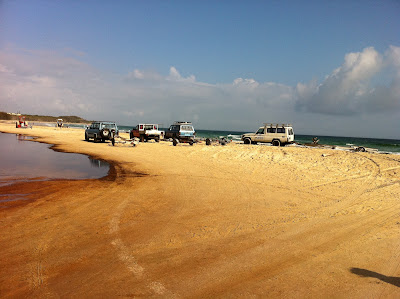
Shorebirds are very easily disturbed by close activity. A disturbance is any action that interrupts the breeding, feeding or resting of shorebirds. For example, causing a shorebird to take flight represents a significant disturbance. When shorebirds take flight they use critical energy that is required for migration and breeding. Repeated disturbances and disturbances that occur before or after migration are particularly damaging for shorebirds. Without sufficient energy reserves shorebirds may be unable to complete their migration or breed. Vehicles driven over Home Beach to the detriment of shore birds and their habitat We can all help prevent shorebird disturbance by following these guidelines: Keep dogs and cats under control and well away from shorebirds. Every time shorebirds are forced to take flight, they burn vital energy. Avoid driving or operating all forms of vehicles, vessels and recreational devices near shorebirds. Use 4 wheel drive vehicles only where permitted...

Where to see Shorebirds on Straddie?

Image
For a good look at shorebirds, sit quietly at a distance and study them through binoculars or a spotting scope. Disturbance from boats, people and dogs is a problem and these sites are best viewed out of the holiday season. Sooty Oystercatchers on the rocks at Frenchman’s Beach   Amity and Flinders Beach  One of the best places to see Straddie’s migratory shorebirds is on the Amity sandbanks at the north-western end of the village where the birds roost at high tide and on the exposed mudflats at low tide. Many thousands of waders and terns are sometimes present in summer. Bar-tailed Godwit and Grey-tailed Tattler are usually very abundant, while Whimbrel and Eastern Curlew are common. From February to August, the Double-banded Plover from New Zealand can be sometimes sighted at Amity but more often at Flinders Beach.  Amity is also a great place to see resident shore and water birds such as bush stone-curlew (especially at dusk in the camp grounds), red-capped ...

Foreign Feathered Friends

Image
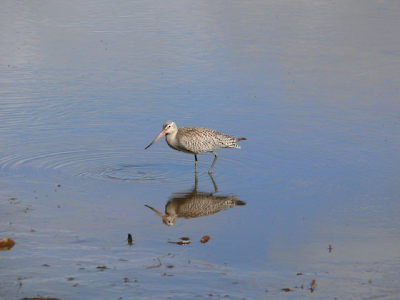
It seems that the plight of immigrants and how Australia should welcome - or reject - them has dominated the news for months lately. While all this has been going on North Stradbroke Island has been quietly providing a temporary home to thousands of undocumented and hungry arrivals. Beginning in early September, Amity Point, 18 Mile Swamp and other wetlands across Straddie and throughout Moreton Bay have been providing a temporary refuge to thousands of migratory shorebirds. Shorebirds, also known as waders, are a diverse group of birds commonly seen feeding in intertidal areas or on the fringes of freshwater wetlands. They generally have long legs in relation to their body size, no webbing on their feet and they do not swim. But they can certainly fly! Bar Tailed Godwit on Home Beach. Most of the migrants spend the months of June and July on their breeding grounds in the northern parts of Siberia, Alaska, China and Mongolia. They breed in areas where melting snow brings mass...