Posts

Showing posts with the label fauna

Turtle Hatchling Success at Straddie

Image
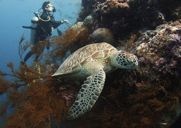
Stradbroke Island, with its protected beaches and dunes, has always been a favoured nesting location for Loggerhead, Flatback and Green turtles. Each year, female turtles come ashore from November to March, crawling to above the high water mark to lay approximately 100 eggs. Some 6-8 weeks later, the tiny hatchlings emerge from their sandy nests to follow the light and head towards the ocean. The sex of a turtle is determined by the temperature of their nests, with warm sand generally producing females, and cool sand leading to male development. This season was no exception. In just a short few days in March it was reported that 113 Loggerhead babies reached the water from their nest on Frenchmans Beach, another 96 Green turtle babies made it to the water from their nest on Main Beach, and over 60 Green turtle babies swam away on Cylinder Beach. Successful breeding at Stradbroke Island for these turtles is critical for the survival of these protected and endangered species. ...
Marine Plastic Kills Seabirds

Image
Sea birds which forage in the Tasman Sea are eating plastic, thinking it is food and are dying in large numbers on Lord Howe Island. Large amounts of plastic are found in the stomachs of shearwaters and one survey found more than 200 pieces in one bird alone and up to 50 in others. The plastics have very sharp edges and tear their internal organs. Toxic substances bind to this plastic, and mercury, toxic to birds at 4 parts per million, was found to be as high as 30,000ppm. 95% of nesting shearwaters on Lord Howe Island were found to have plastic in their stomachs. It was thought that the huge N Pacific garbage patch or gyre north of Hawaii, which gathers plastics from N America and Asia, was the source of their problem but the migratory birds had none in their stomachs when they arrived in September. From Lord Howe, they forage in the Tasman Sea off the coast of NSW, Vic and Tasmania and a few months later are found to be full of plastic. The shearwater numbers have halved since 1970 ...

Island koalas in the limelight

Protecting south-east Queensland’s dwindling koala population is becoming a hot topic. The issue has featured heavily in the media recently. FOSI has made a submission to the State Government calling for urgent action to protect the unique island koalas before it is too late. North Stradbroke Island (NSI) is the home of a vigorous and healthy population of koalas. There is a low incidence of common koala diseases and research that has been carried out to date shows that they have been genetically isolated for about 8,000 years. Stradbroke's koalas constitute the only naturally- occurring Island population in Australia. These koalas are unique and deserving of special consideration.Further research may reveal that these koalas hold the key to curing the mainland populations of various common diseases, as NSI’s koalas currently appear to be more robust. North Stradbroke Island has a small (300-1000 individuals) but significant population of koalas that require the highest possible pr...